One of the most common mistakes in an early draft is not starting the novel in the right place. It’s true, here are the most frequent culprits I have seen in my work on manuscripts, in no particular order:
Starting with backstory
Starting when nothing is happening
Starting “in media res” but it is so much without context that the reader has no hope of understanding what is going on.
Starting with quotidian details that are not important to the plot at any point
Starting with an infodump
Take a quick look at your beginning—is yours one of these? If it is, it’s okay, you can fix it! Here’s a hint for where to start your story. It seems simple, but think about it.
A story starts when something changes.
Examples:
I Have Some Questions for You starts when someone sends a video link to the protagonist that starts her down the path that changes everything.
My Mother’s Secret starts when Regina goes on the run to escape the secret police.
Act of Oblivion Starts when the father of the Gookin family brings two regicides home to Massachusetts to hide them in his family home.
Mexican Gothic starts when Noemi’s father sends her to find and look after her cousin.
The cover of the edition I read enticingly promises that Carmilla inspired Dracula. Reading it, one thinks this may be so! If you are a fan of the Gothic, this book is for you. If you like Vampire stories, this book is for you. If you are looking for a novella that encapsulates the five point story structure, this book is for you, too. The setting, as in all good Gothic novels, is in a remote castle in a Catholic country, in this case Austria. So far, so good. There is the hint of the supernatural, but until the story really gets rolling, it is just a hint. The story is told by the erstwhile victim of said vampire, who has, thankfully, escaped her clutches and so lived to tell the tale. She tells it looking back, a device which can be helpful, as the narrator can let the reader in on things that story characters don’t know.
Here is the story in a nutshell (SPOILERS TO FOLLOW):
Inciting incident—carriage accident that leaves a beautiful stranger (Carmilla) staying with our narrator.
Complications—Mysterious illness afflicting Carmilla and narrator and they have a weird connection.
Crisis—Family friend comes to visit and tells narrator’s father about his daughter’s death at the hand of a mysterious undead beautiful woman.
Climax—They confront beautiful Carmilla in her coffin. (Gross factor—she is floating in blood, eeewwww…)
Resolution—Carmilla is killed, grave destroyed, order restored, but narrator is sad.
This tiny little novel is great on many levels, but also just as an interesting story with a lot of discussion potential. There are strange relationships, why are the predator and the prey both women? Usually that is not the case? Why is the familiar of the female vampire a huge cat, rather than the wolves and bats we see in other vampire tales? Are we really supposed to believe that teeth make tiny puncture marks that look like they could have been made by needles? What kind of teeth are those? You see what I mean.
If it takes your fancy, I would recommend it as worth your time.
A wise book coach once advised that the query letter sells agents on reading the pitch. The pitch entices them to want more.
When I first started pitching to agents, I had a few full MS requests. (Yay!)
Wrong.
But I didn’t give up. A few months later, I attended a workshop by Jennie Nash and then met my tried-and-true book coach Robin Henry.
Here are some tips and a few things I have learned along the way to help you keep your query out of the “no” pile.
Research! Research! Research!
Before you do anything, make sure you know something about the agent you wish to pitch. This helps tremendously when it comes to writing your letter. (And it’s kind of fun!)
Do they have a podcast you enjoy? Check out their bio. Does their wish list include genres/topics that resonate with your book? Did they post something on social media that you enjoyed?
Honestly, I think one reason agents have responded to my queries is that I only pitch agents I have researched. Find an authentic way to connect to them in one opening sentence. It’s friendly and shows that you genuinely want to reach out to them, not just any agent who will give you a chance.
Check their Submission Guidelines
Every agent is different. Some want 20 pages, some want a chapter, and some want a query letter written in a specific manner.
Follow their submission requirements and then double-check yourself. It shows that you’re a professional and not a rookie.
Some agents might have you fill out your query on Query Manager, which is nice because you can track your query.
Response Times
Grab a cup of coffee, cuddle your dog, or take a walk. You’ve sent your baby out into the world! Patience is your superpower.
The submission guidelines may tell you how much time to expect to wait for a response. If not, wait a few months and then consider sending a short checking-in email.
Still nothing? Don’t sweat it. It might be a pass, but that means you haven’t met the right agent for you—yet.
Rejection/Restart:
When I receive a rejection letter, I respond with a brief thank you and then hit the print button.
If they provide any feedback, take what you can from that to make your book better. Feedback is gold.
Then I have a little ritual that makes the rejection sting a little less:
There’s a nail on my studio wall where my rejection letters hang like badges of honor. Maybe I’m a masochist, but I know that one day, I’m going to place a letter at the top of that pile from an agent that believes in my book as much as I do.
I hope this helps, and good luck!
This guest post was written by Tara Bradley Connell, a Readerly Writer currently pitching her book.
My grandmother instilled a love of reading in her children and many of her grandchildren. In fact, two of us are librarians. Growing up, I had access to the personal libraries of my grandmother, aunt, uncle and mother.
In my aunt’s personal library, there were books with characters created by Toni Morrison, Gloria Naylor and James Baldwin who reminded me of relatives, friends or neighbors. My mother’s library included a lot of historical fiction. My mother and I continue to share an interest in reading about Elizabethan and Victorian history.
Reading my way through family libraries helped me realize how often Black people’s presence has been overlooked, especially the presence of Blacks who were not enslaved in American and European history. I knew people who look like me had to have been present in some way. I began to search for them and I found some of them thanks to some of the following books.
In November 2001 the Washington Post published an article about a portrait that at the time was thought to be of Guilia de’ Medici. The portrait was newsworthy because Guilia was of African descent and a Medici. Gabrielle Langdon’s Medici Women: Portraits of Power, Love, and Betrayal in the Court of Duke Cosimo I includes a chapter about the symbolism in the portrait and the most biographical information I could find about Guilia d’ Alessandro de’ Medici. Recently, the woman in the Allori portrait Langdon wrote about is no longer thought to be Guilia. But in a Pontormo Portrait of Maria Salviati and a child, Guilia has been identified as the child.
Guilia de’ Medici was the illegitimate daughter of the first Duke of Florence, Alessandro de’ Medici. The biracial son of an African mother and Lorenzo II de’ Medici, Catherine Fletcher’s The Black Prince of Florence: The Spectacular Life and Treacherous World of Alessandro de’ Medici is not as illuminating as I hoped it would be. After being murdered in 1537, a lot documentation about him has been erased from history by contemporary enemies and racism against Africans initiated in the 16th century to justify colonialism.
Black Africans in Renaissance Europe edited by Thomas F. Earle and Kate J. P. Lowe expanded my knowledge about noble, free and enslaved Africans in Portugal, Spain, Italy and England. Published in 2005, this book includes the first chapter length biography of Alessandro de’ Medici I read.
I was extremely pleased to read chapters about historical Black people in Miranda Kaufmann’s Black Tudors: The Untold Story. As Fletcher experienced when writing The Black Prince of Florence, Kaufmann had limited documentation for the biographies in her book. Renaissance art featuring Blacks has often led me to research the subject of the portrait as it did with Guilia de’ Medici. I was pleased that an image of trumpeter, John Blanke, featured in the Westminster Tournament Roll was included in Kaufmann’s book with her research about him.
Olivette Otele’s African Europeans: An Untold History does a great job of synthesizing the history of African and European relationships beginning in the classical period, the development of racism, the effects of colonialism and current struggles in an extremely readable history. Otele writes about Alessandro de’ Medici and Juan Latino in her chapter about the Renaissance. Her inclusion of the racial constructs of the historical period illuminates her research in an innovative way. In addition, all the books mentioned above except Langdon’s are included in Otele’s bibliography.
I have always enjoyed learning through reading. My hope is to synthesize what I have learned over the years about Blacks in the Renaissance into engaging historical fiction for my mother, aunt and others like us. In essence, I am writing what I enjoy reading with characters I can relate to.
Maybe one day, a reader of one of my novels will experience the same feeling of being seen that I did when I first read the books of Toni Morrison, Gloria Naylor and James Baldwin.
Why do we use terms like cautionary tale, morality tale, allegory?
Because stories help us understand other people.
Stories help us remember things.
Stories open a window to understanding that preaching at people does not.
When you listen to people who either love or hate history, the main difference between them is usually a teacher’s approach. If they had a teacher who emphasized dates and events and IMPORTANT people, they probably don’t enjoy history. If they had a teacher who told them stories about people that REALLY HAPPENED, they probably love it.
In library school, we read a ton of children’s and Young Adult literature and we were required to review it and write those reviews according to a standard of quality. The kiss of death? Didactic writing (i.e. Preachiness)
When you are writing your book, let the story make readers feel emotions. let the story give them empathy. Let the story show them what it is like to be a woman, a person of color, poor, marginalized, underestimated, overestimated, the underdog, the anti-hero, whomever you are writing about.
The lesson comes from understanding what your main character is up against, not through addressing the reader directly and telling them what you want them to think.
Last summer, I decided I wanted to attend a writing retreat, and I had very specific goals in mind for this retreat.
To travel away from home, preferably outside the United States.
There to be history and culture so that I could be inspired in my downtime.
To work with a book coach– a good listener who understands the craft but who won’t try to change my story or my style.
Structured enough to accomplish my goals but flexible enough to account for those unexpected periods of writer’s block that arrive at the most inopportune times.
As luck would have it, my amazing book coach Robin Henry, announced in January that she was offering a personal writing adventure in Estonia. (see the previous post) In this post, I wanted to share what my adventure entailed.
A month before my travel time, Robin and I held a special Zoom meeting to discuss what we wanted to work on that week and decided that restructuring the timeline of one of my protagonists, Hattie was the best use of our time. So, my prework consisted of reworking Hattie’s outline, which meant moving her story forward five years. I submitted the new outline ahead of time for Robin’s comments.
On my arrival day in Estonia, Robin picked me up at the airport and checked me into my historic hotel. Then we made our way through Estonia’s landmark and wound up in a quaint little tea shop, where we had the first of my favorite type of sessions with Robin. We didn’t talk about the outline, didn’t talk about the structure, or the mechanics of the book. Instead, we talked about my characters and their stories. Robin listened as I told background story after story, as if I were talking about my nephews or dogs. Why were these sessions my favorite? Because I believe the more you talk about your characters and the lives you’ve built for them, the more real they become, and then when you write it, it sounds more authentic.
The next morning we met and talked about the goals for the week and walked through her comments on my outline. My main goal was to get Hattie through part one of the book. With that in mind, we planned my writing time and submissions, her comments back to me, our meetings to discuss those comments, and then our cultural activities ( and pancake time!)
It was all very structured and planned, but then my jet lag kicked in. Suddenly I was sleeping when I should be writing and writing when I should be sleeping. And Hattie, being true to her rebellious nature, didn’t want to follow where I was trying to lead her. This is where the flexibility of the program and the one-on-one time proved invaluable. Robin was more than willing to adjust and even held a few writer/character counseling sessions to help get Hattie and me past our differences so we could move forward.
As a result, Hattie is now a much richer and more well-rounded character and has made her way through part one.
I highly recommend this program. The program is designed to help you meet your personal goals. Estonia is fascinating and rich in culture, history, and beauty. And whatever your objectives may be, Robin will help you get there.
This one had been on my TBR pile for a while, and I finally decided to get a subscription to Audible so I can listen while I run. I usually listen to Nonfiction, but I am trying to branch out! Anyway, I LOVED this book. The reviews and accolades that have been showered on it are entirely deserved.
The Maid is the story of Molly, a neurodivergent maid at a fancy NYC hotel who finds a dead body one morning as she is making her cleaning rounds. She is, of course, railroaded by the cops, one in particular, and the reader knows she didn’t do it. How will she prove it? Enter her gang of unlikely and wonderful friends who help her hatch a scheme to catch the real killer.
There are so many things to love about this book. Molly is completely charming as a twenty-something who thinks and talks like a little old English lady, because she was raised by her Gran. All the characters have color names, so CLUE immediately springs to mind. The way Molly forgives and overcomes the people who talk down to her and make assumptions (she uses one of my favorite expressions about how to assume makes an a** out of [yo]u and me), and the way the friends work together is truly heartwarming.
Yes, there is pain in the book—Molly is grieving for her Gran, who has recently died, and she faces a mountain of financial difficulty, but her spirit remains unbroken and she is someone we would all like to have as a friend. The only thing I didn’t like about the novel is the final twist, but I will not give it away here. If you want to discuss, shoot me an email.
The Maid is a great example of using the story to get the message across. There is plenty of social commentary about the way neurodivergent people are treated, the way the working poor are mistreated, and how society could do better, but she doesn’t preach to us, she lets the story make us feel. Writers take note, this is how it is done.
I recommend this novel for readers who like Agatha Christie, Columbo, and closed room mysteries with a dash of heart.
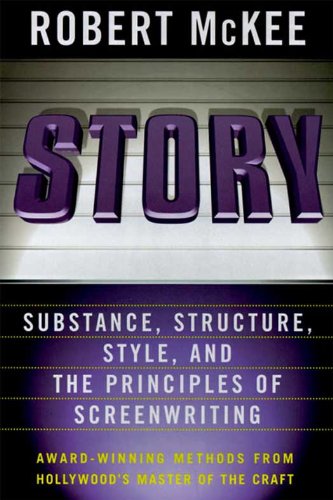
Story: Substance, Structure, Style, and the Principles of Screenwriting by Robert McKee is a little older, but it was recommended by Jane Friedman, a publishing professional for whom I have a great deal of respect. I am SO GLAD I read the book. It is insightful about what makes a story work, helpful in explaining the details, and I loved the no nonsense voice of the author. I tend to be a proponent of tough love, as my clients will tell you, so a straightforward approach lands well for me.
This post will not be a comprehensive dissection of the book here, as it is 468 pages packed with writing goodness. The book is intended for screenwriters, but most of the lessons apply to novel writing as well. Here’s the bottom line: Story Matters! You can have great characters, an exciting plot, lots of action, but if you don’t have a message and a story, it won’t work.
Story has five non-negotiables:
The inciting incident
Progressive Complications
Crisis
Climax
Resolution
These five elements exist in a big picture, overarching way, but they also exist within each act of a novel.
I’ve written before about how all beat sheets, story structure outlines, etc are basically the same, and it is still true. All of them include these five elements in some form or fashion. It seems you just can’t write a book or watch a movie without them. As writers, we would be wise to pay attention.
If you want more information about McKee, he was recently featured on the Thoughtful Bro podcast (I know…, but give it a listen) in which he riffs on the Hero’s Journey. Keep listening if you fear he has forgotten the original question, he eventually gets back round to it. I will respectfully disagree with his statement that there are no female journeys. See more about the Heroine’s Journey below.
Outlining is a valuable tool at any point in the writing process: just getting started, revising your novel, or writing your summary to query.
If you wonder more about how all outlines are the same, check out the mini-course on Outlining. It will help you figure out which one of the many variations on an outlining theme will work for you and your novel.
Get Robin’s Outlining Mini-course, which includes video lessons, a workbook, templates, and a deep dive into outlining once you have selected your beats.
This pair of episodes discusses unlikeable/self-absorbed main characters. Terry and I read The Beautiful and the Damned by F. Scott Fitzgerald and The Plot by Jean Hanff Korelitz.